
How LitLab Supports Ohio’s Science of Reading Policy with Daily Classroom Practice
Ohio has built one of the country’s clearest early literacy policy frameworks. LitLab helps schools bring that vision into daily practice with curriculum-aligned decodables, oral reading fluency, and skill-level feedback.
Through ReadOhio and related literacy legislation, Ohio has made a serious commitment to early literacy. The state has defined what science-of-reading-aligned instruction should include: explicit, systematic instruction in phonemic awareness, phonics, vocabulary, fluency, comprehension, and writing. Ohio has also taken a clear stance against three-cueing approaches that encourage students to guess at words using meaning, sentence structure, or visual cues instead of decoding [1].
Policies like these create the foundation for strong reading instruction. In classrooms, that foundation comes to life through the texts students read, the skills they practice, the feedback they receive, and the way teachers monitor progress.
LitLab supports that implementation work by helping teachers provide curriculum-aligned decodable practice, oral reading fluency routines, and skill-level feedback tied to the reading skills students are learning.
Ohio has defined what strong reading instruction should look like
Ohio’s early literacy policy is grounded in decades of reading research. One of the clearest findings from that research is that learning to read is not the same as learning to speak. Most children need to be taught how print represents spoken language: how sounds map to letters, how spelling patterns work, and how accurate word reading becomes automatic enough to support fluent comprehension [2].
Ohio’s policy reflects that understanding by prioritizing systematic instruction and giving schools a clear framework for teaching students how written language works. Just as importantly, Ohio has made clear that beginning readers should not be taught to guess at words using pictures, sentence structure, or context. Students should be learning to decode the words on the page [1].
LitLab supports this vision by helping teachers provide reading practice that is connected to the skills students are learning. LitLab is not a replacement for a school’s Tier 1 curriculum. Instead, it functions as a practice layer that helps students apply taught phonics patterns in connected text.
When students are learning a specific phonics skill, teachers can use LitLab to find or create decodable texts aligned to that skill. This gives students more opportunities to practice decoding in context, not just on isolated word lists or worksheets.
Strong curriculum needs strong practice
Once a district has adopted a strong reading program, the next challenge is daily implementation. How do teachers give students enough practice with the exact skills being taught, without drifting away from the school’s core literacy curriculum?
LitLab is designed to help with that practice layer. Teachers can browse curriculum-aligned decodable texts or create their own custom decodables tied to specific phonics skills. They can generate fiction stories, nonfiction passages, and Reader’s Theater scripts that give students more opportunities to apply taught patterns in connected text. They can also print stories, assign them digitally, or use printable activities to reinforce practice beyond the core lesson.
For schools using programs such as CKLA, UFLI, Fundations, Reading Horizons, Benchmark, Superkids, or other structured phonics sequences, LitLab helps teachers extend practice while staying connected to the adopted scope and sequence.
That matters because aligned practice is one of the places where policy becomes real. Students do not just need more reading time. They need more reading time with texts they can actually decode using the skills they have been explicitly taught.
LitLab also gives students ways to practice those skills independently. Students can read skill-aligned stories, practice spelling, create their own decodable stories, and receive feedback after reading. These student-facing tools help turn aligned practice into something students can do again and again, while still keeping the work connected to the phonics instruction happening in the classroom.
This is the bridge schools often need: strong instructional materials as the foundation, and frequent, skill-aligned practice that helps students actually apply what they are learning.
Ohio’s position on three-cueing
A strong piece of Ohio’s early literacy policy is its clarity around three-cueing.
Three-cueing is a model of reading instruction that encourages students to identify words using meaning, sentence structure, and visual cues. In practice, that can mean prompting a child to look at the picture, think about what would make sense, or use the sentence context to guess an unfamiliar word.
Ohio has taken a clear position against this approach by largely prohibiting materials and methods that rely on three-cueing, unless a waiver applies [3].
This policy reflects a central insight from the science of reading: beginning readers need to learn how to decode the words on the page. They should be building connections between letters, sounds, spelling patterns, and word meanings, not relying on pictures or context to guess words they have not yet learned to read.
LitLab’s oral reading fluency (ORF) platform was explicitly designed to avoid visual cues when decoding. In LitLab’s ORF mode, the student reads the text aloud before the image is shown. The image remains hidden until after the student has read the passage aloud. Therefore, teachers can be sure a student’s audio recording is based on the text, not picture-based guessing.
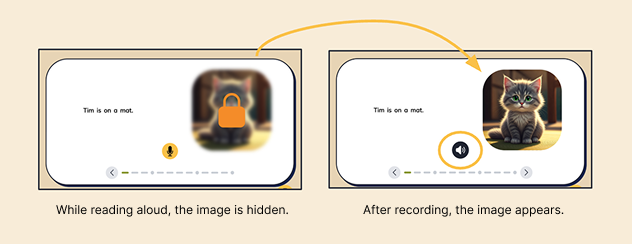
In LitLab’s oral reading fluency mode, students read the text before seeing the image, helping ensure that progress monitoring reflects decoding rather than picture-based guessing.
In independent practice mode, images may appear to support student engagement and comprehension. But LitLab’s progress monitoring, evaluation, and feedback workflows use oral reading fluency mode, where the image is hidden until after the student reads aloud.
When teachers review a student recording, they are reviewing an authentic attempt to read the words on the page, not a response shaped by visual cues, which is especially well aligned to Ohio’s policy direction.
Reading plans work best with skill-level feedback
Ohio’s early literacy system also includes structures for identifying students who need support.
Ohio’s Third Grade Reading Guarantee requires schools to identify K–3 students who are reading below grade level and provide support. Schools administer reading diagnostics early in the year, and students who are not on track receive a Reading Improvement and Monitoring Plan, often called a RIMP [4].
A reading plan should do more than document that a student needs support. It should help teachers decide what to practice next: which phonics patterns need reteaching, which students need more time with a skill, and whether students are transferring what they have learned into connected text.
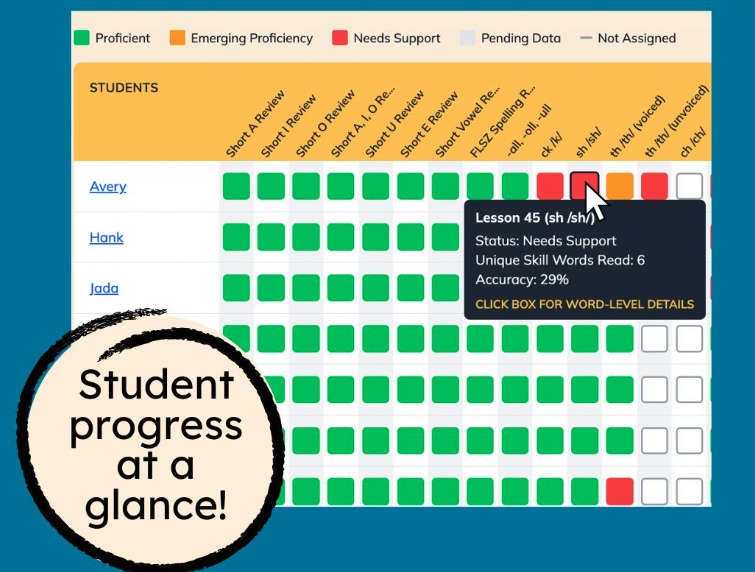
LitLab Skill Maps help teachers see student progress at the skill level. As students read assigned texts, teachers can review recordings, fluency information, and progress connected to the phonics sequence. This gives teachers a more continuous view of how students are applying taught skills during reading practice.
Daily practice is where Ohio’s policy vision becomes real
Ohio has built a strong early literacy policy foundation. The next step is carrying that vision into daily classroom practice.
That means giving students frequent opportunities to read decodable texts aligned to the skills they are learning through Tier 1 instruction. It also means helping teachers keep extra practice, intervention, and progress monitoring connected to the adopted curriculum.
LitLab supports that implementation work by helping teachers provide aligned reading practice, capture students reading aloud, and monitor progress at the skill level.
With LitLab, teachers can:
- Browse curriculum-aligned decodable texts
- Create custom decodables tied to specific phonics skills
- Print stories or assign them digitally
- Use oral reading fluency mode to capture students reading aloud
- Review student recordings and fluency information
- Monitor progress across skills with LitLab Skill Maps
This gives schools a practical way to connect Ohio’s policy clarity to the reading practice students experience every day.
What Ohio schools can do next
Ohio has done much of the hard policy work. Now schools need daily routines and tools that reflect that same instructional clarity.
A practical implementation plan might include:
- 1 - Use approved high-quality instructional materials as the source of truth.
- 2 - Give students daily decodable practice connected to the phonics skills they have been explicitly taught.
- 3 - Keep intervention aligned to Tier 1 instruction.
- 4 - Use progress monitoring that requires students to read the text before seeing supporting images.
- 5 - Monitor day-to-day progress at the skill level, not only through broad benchmark or diagnostic data.
- 6 - Use student reading data to guide reteaching, additional practice, and intervention decisions.
LitLab can help Ohio schools provide that support.
What to do next
Here are a few ways to get started with LitLab:
- 👉 Sign up and try LitLab for free
- 📚 Browse LitLab’s library of curriculum-aligned decodable texts or create your own custom decodable
- 🖨️ Print stories or assign them digitally to students for reading practice
- 🏫 Learn more about LitLab for schools and districts
References
[1] Castles, A., Rastle, K., & Nation, K. (2018). “Ending the Reading Wars: Reading Acquisition From Novice to Expert.” Psychological Science in the Public Interest.
[2] Ohio Revised Code. “Section 3313.6028 | Literacy curriculum.”
https://codes.ohio.gov/ohio-revised-code/section-3313.6028
[3] Ohio Department of Education and Workforce. “Guidance on Ohio’s Prohibition on Three-Cueing.” March 2024.
https://education.ohio.gov/getattachment/Topics/Learning-in-Ohio/English-Language-Art/Resources-for-English-Language-Arts/High-Quality-Instructional-Materials-in-English-La/Three-Cueing-Guidance-Final-March-2024.pdf.aspx?lang=en-US
[4] Ohio Department of Education and Workforce. “Third Grade Reading Guarantee.”
https://education.ohio.gov/Topics/Learning-in-Ohio/Literacy/Third-Grade-Reading-Guarantee
LitLab serves 5,000+ school sites and 400,000+ students across K–5. It meets ESSA Tier IV evidence standards and aligns to UFLI Foundations, CKLA, Fundations, Reading Horizons, Superkids, Benchmark, and other major phonics programs. 👉 Learn more to see how it fits with your current program.